 PhilomobileBy Laurence Bouchet
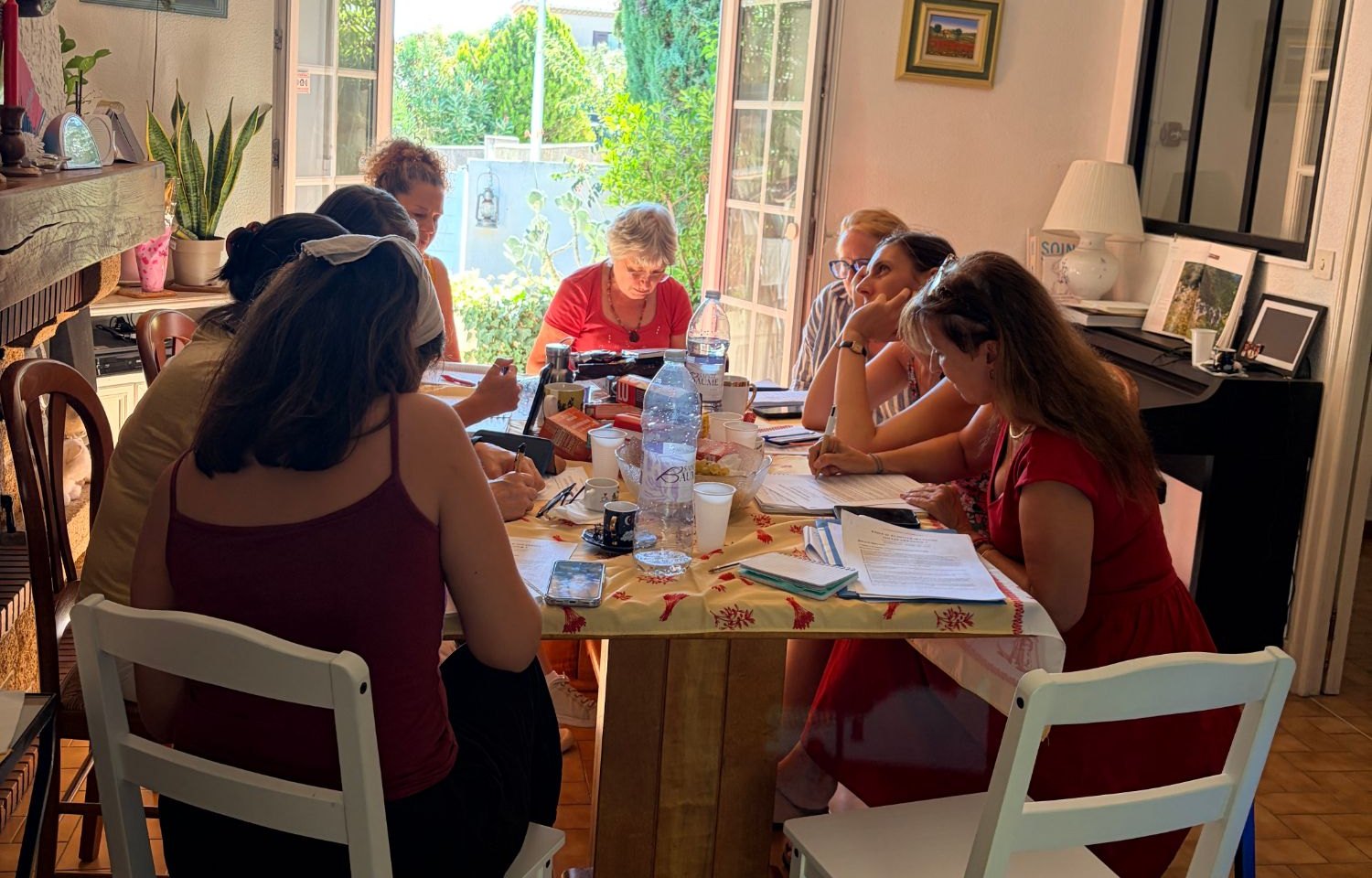
(I wrote this text thanks to reflections shared with inmates at the Besançon prison, with friends on Facebook and elsewhere, with members of my family and with teenagers at a secondary school in Planoise. All of it also nourished by some reading.
Ideas don’t fall from the sky: they are the product of exchanges and shared questioning, but also of moments of dialogue with oneself.)
Cows peacefully ruminate their fodder; human beings, less peacefully, ruminate their thoughts.
What kind of thoughts do we ruminate on? Those linked to our painful experiences: disappointments, injustices, misfortunes. Working life, married life and family life are sometimes sources of painful thoughts that we sometimes ruminate on ad nauseam. We have been bullied or ignored by a superior, our love has disappointed us, our parents are a burden, our children are ungrateful.
Our ruminations may also be linked to a future we imagine to be dark: for example, we think a global conspiracy is being hatched or, closer to home, we suspect those around us of the worst intentions. Rumination can tip over into paranoia.
When we ruminate inwardly, it makes us look absent and preoccupied. Someone who ruminates is not present to what is happening around them.
Sometimes we share our ruminations with others; we would like to win them over to our side. But if they have other reasons for living, or other ruminations of their own, our endless brooding eventually becomes unbearable to them.
The thoughts we ruminate on usually assail us when we are left to ourselves: moments of boredom, waiting rooms, car journeys, insomnia. These dark thoughts take hold of us without our noticing. They stealthily impose themselves and settle in, and we end up consenting to them because we acquire a taste for them.
There are also collective ruminations, in which rumination attaches itself to a fear linked to an external cause: the poor are going to overrun us, the rich wish us harm and will destroy us. In herds, ruminants feel stronger; sometimes they found political parties.
Rumination provides a mixture of suffering and enjoyment. Suffering, because by thinking about it again we reactivate the injustice or disappointment that hurt us; but also enjoyment, because on the one hand this suffering tells us we are truly alive (only the dead do not suffer), and on the other, by going over it again and again, we reassure ourselves that we are on the right side. The one who suffers attracts empathy: they are the victim, necessarily good, and the others are the tormentors. By ruminating, we constantly find new elements that reinforce our point of view and justify us. This pattern provides a passive enjoyment: we revel in it; we have nothing else to do to exist but denounce the villains and show how good we are. Rumination then tips over into resentment.
If anyone offers to relieve us by getting rid of the external source of our pain, we pull a face. The cause of our worries must not vanish, after all, because we need it to confirm us in what we are. Or perhaps the disappearance of this external source of evil would bring us face to face with a more inner source that we do not want to look at.
What would some ruminants — obsessive supporters of a cause or a political party — do if what they fight against, and what feeds them, suddenly disappeared? What would they occupy their thoughts with? If migrants went back to their countries, if white males became gentle and sensitive beings, if radicals gave up their stupid and uncompromising prudishness and their invasive proselytism, if the rich gave up their arrogance and their money, if feminists fell silent, if unruly youths from the suburbs settled down — whom could we fight in order to exist? “Don’t take away the object of my resentment,” the ruminant secretly thinks, “or I’ll have no other reason to live.” Some ruminants, enemy brothers, even seem to ally with one another, supplying each other with reasons to hate — and therefore to live. Rumination has the advantage of filling our existential emptiness.
Ruminations, like the secretions of our body, have something disgusting about them when viewed from a distance. Without distance, they do not bother us and we willingly indulge in them. Just as we are not bothered by our body odours as long as we do not think they might bother others, our ruminations do not trouble us — we even relish them — as long as we are left to ourselves. They give us a form of self-enjoyment. Over time, however, they can destroy our mental health.
This disgusting aspect gives rumination a bad name, and when it produces nothing but a pathological digestion, such as paranoia or resentment, it is not a pretty sight.
So personal development tries to rid us as quickly as possible of these painful, looping thoughts that could make us bitter. Meditation, mindfulness and attention sessions make it possible to break away from ruminations and stop their flow.
Some even suggest getting rid of the mind altogether, so as to be pure presence. But besides the fact that this is not possible in the long run, it would be a shame to throw the baby out with the bathwater. Yes, our thoughts can torment us and make us ill; but no, thinking is not an illness. We are not going to cut off our foot because we got blisters walking.
By wanting to get rid of rumination too quickly, by wanting to focus on positive thoughts or on the absence of thought, we risk missing the negative and the wealth of experience it offers.
Whoever refuses to take in the negative does not digest, does not assimilate. To take in the negative, we have to go through a period of rumination. Rumination will then allow us to examine and re-examine patiently, to look despite a certain disgust, to separate the wheat from the chaff, to digest what must be digested and to expel the rest.
Rumination is not only an examination of theoretical, abstract ideas from which we would be absent. It has an existential dimension. This means that while it is going on, we are traversed by thoughts that bring emotions with them: we go through sadness, anger, fear and joy, without settling permanently on any of them. At the end of a healthy rumination, it is nevertheless joy that prevails — an affect that signals an increase in the power to exist, as Spinoza put it.
It is little by little, by feeling emotions, that our thoughts become part of us and that we draw real lessons from the experiences we live through. For example, I suffer because I live or work with people I cannot stand; I cannot manage to communicate well with them. I am hurting; they don’t understand me. At first, it is important to feel this unease and to become aware of it. If I were thinking positively, I would say, “It doesn’t matter, let’s be kind, let’s look on the bright side and everything will be fine.” But in reality, that would be going too fast, and I would only be repressing what disturbs me.
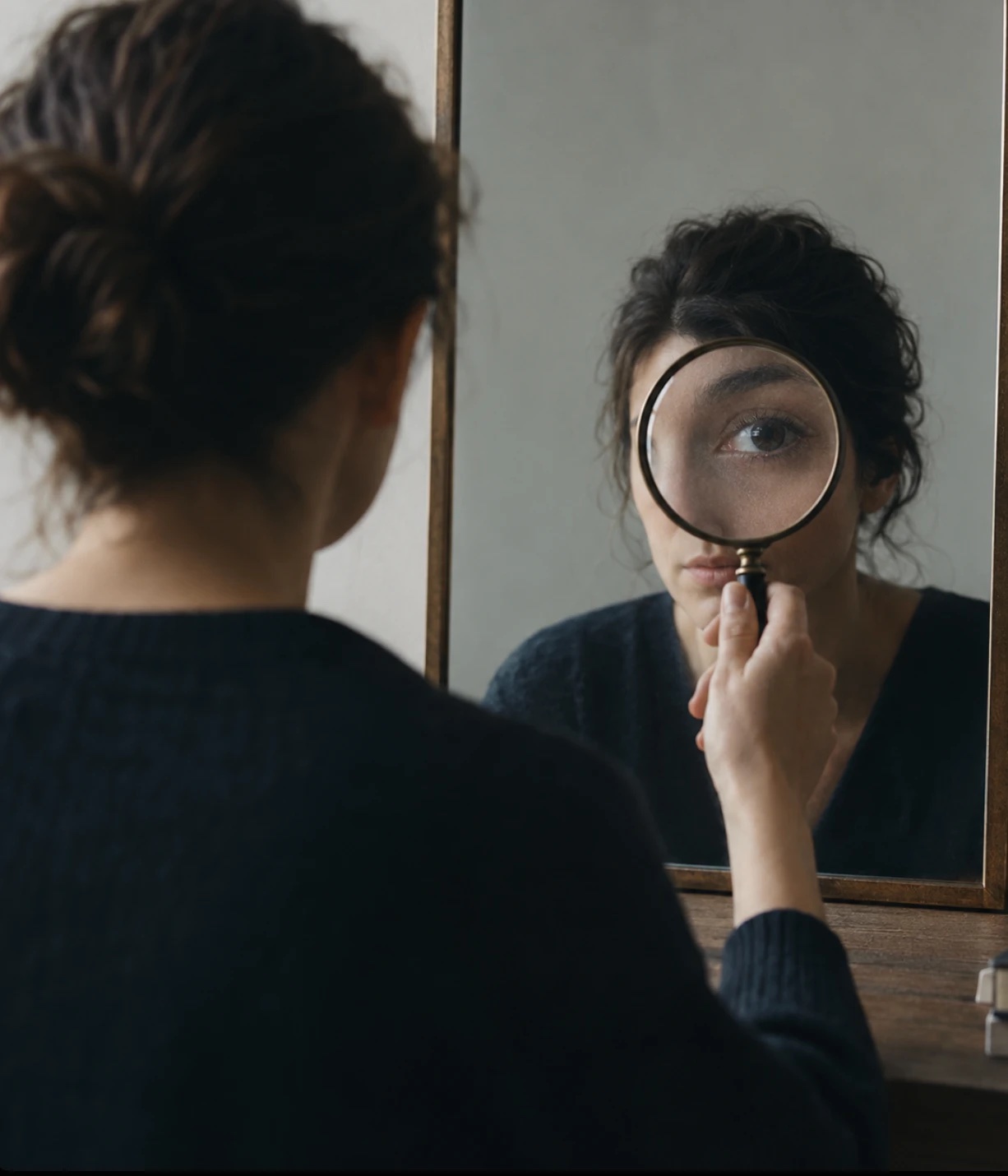
In a healthy rumination, I can examine things from various angles and take the time to look more deeply. “I suffer from this difficulty in communicating. Perhaps there is an explanation. For a long time, I was preoccupied with my fear of loneliness; I went towards others to escape myself, not because I was interested in them. Or again, my unhealthy desire for recognition kept me from being attentive to others, whom I turned into spectators rather than interlocutors — which is why I find it so hard to communicate with them today. And don’t they have the same kind of problem themselves? Let’s look at things closely, then step back a little.” Isn’t there real pleasure in ruminating this way?
In an active rumination that takes the form of an inner dialogue, I reject some thoughts and keep others that seem more accurate to me. Then, by dint of ruminating and digesting, I no longer even need to think about it: what deserves to be forgotten will be. Let us also trust the process: things happen within me without my controlling them all.
 Reflections
 Reflections
 Reflections
CONTINUE THE DIALOGUE
Your reflections on this text
These lines make no claim to definitive truth: they are a proposal to discuss, extend or contradict. Your objections, questions and hypotheses are welcome.