 PhilomobileBy Laurence Bouchet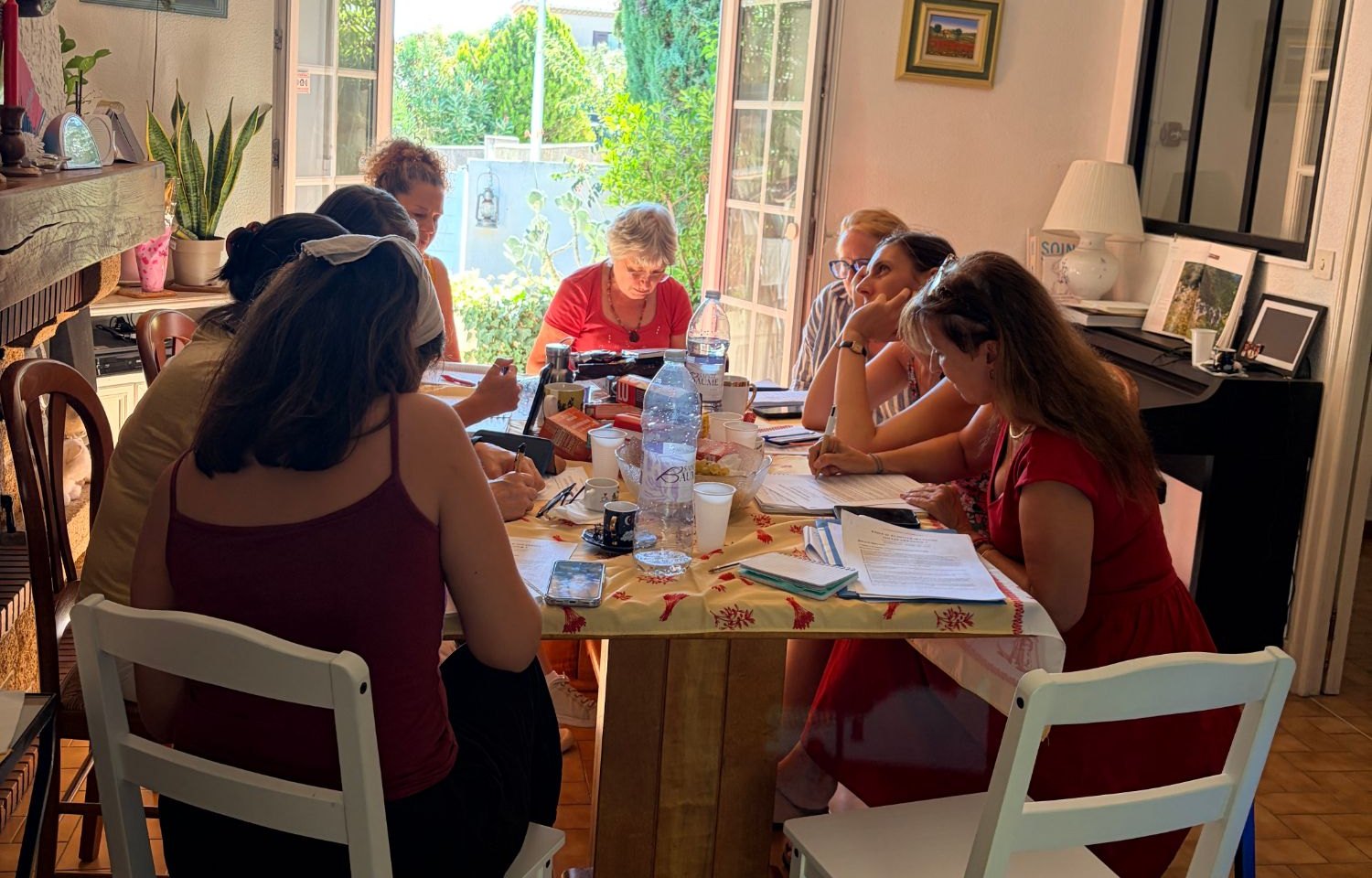
The fears we don’t want to see
During the philosophical practice retreat we held in Marseille on the question “Should we listen to our fears or overcome them?”, one fact first amused us: only women, about ten of them, had signed up. Yet the event had in no way been designed as a women-only retreat. Was it because men are less afraid? Or because they find it harder to admit their fear? We will come back to this, because some fears may be all the more powerful for not being recognized as such.
Admitting one’s fear is not just naming an unpleasant emotion. It sometimes means admitting one’s vulnerability, one’s uncertainty, one’s need for others, or simply the fact that some situations are beyond us. Yet a whole social imagination associates control, self-assurance and the apparent absence of fear with a certain idea of strength. It can then become easier to deny fear than to try to understand what it reveals.
This is the path we explored over those two days. Fear is not only an immediate reaction to an identifiable danger. It can also become a more discreet tendency that steers our behaviour, our choices, our relationships and sometimes even our way of inhabiting the world. We generally know what we are doing, but much less clearly why we are doing it. We may want to succeed, to control, to please, to convince, to keep a low profile, to protect ourselves or to make ourselves indispensable, without always seeing what feeds these attitudes. Behind some of them, fears may be hiding: fear of not being loved, fear of lacking, fear of being abandoned, fear of being stupid, fear of depending, fear of losing, fear of not being recognized or, more radically, fear of dying.
A first question then arises: what if a large part of our behaviour were guided less by what we want than by what we are trying to avoid?
Spinoza: do we know what determines us?
This hypothesis echoes a central idea of Spinoza’s. Human beings, he explains, believe themselves free because they are conscious of their actions, but they are often ignorant of the causes that determine them. We therefore easily experience our decisions as spontaneous or voluntary, when they take place within a web of affects, habits, attachments, representations and desires of which we have only partial knowledge. Some fears may be among these determinations.
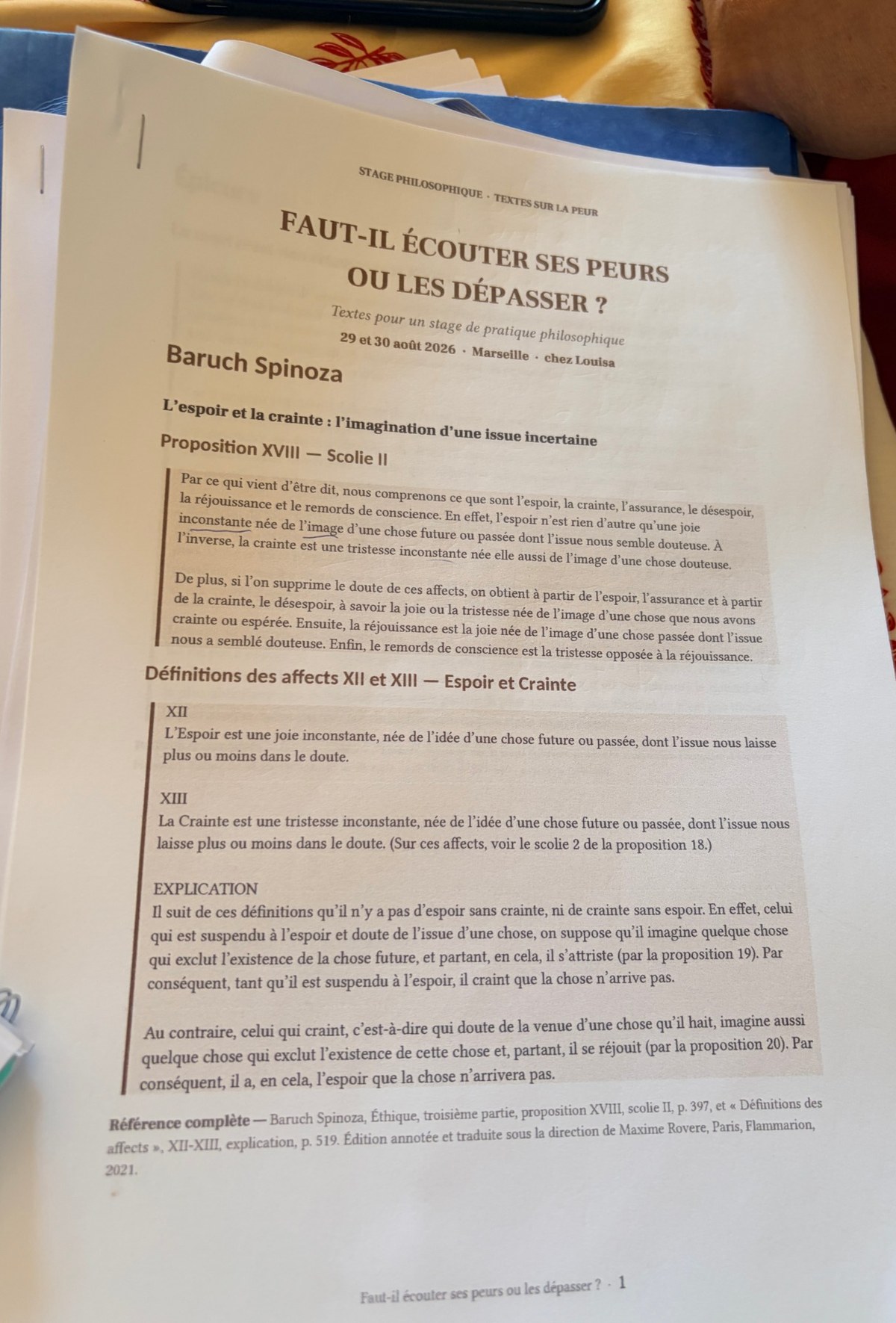
From Spinoza we can keep this general idea: we do not always clearly know what affects us or what guides our conduct. We know the effects produced in us, but much less the causes that produce them. We receive an event, a gesture, a word, a silence, and then we interpret it. Little by little, this interpretation — usually too quick and superficial — can impose itself on us as self-evident.
Take a simple situation. Someone has to speak in front of a group and feels strong apprehension. They may say: “I’m afraid of speaking in public.” But this tells us almost nothing yet. What exactly are they afraid of? Of making a mistake? Of losing their words? Of being judged? Of seeming uninteresting? Of not appearing intelligent enough? Of suddenly seeing themselves as they do not want to see themselves? The more we question the fear, the more its object shifts.
Another example: someone receives a very short message from a person they love. They immediately think: “He’s cold, he’s drifting away from me.” They then feel worry, sadness or jealousy. Yet they are largely unaware of the causes that led the other person to write the message that way. He may be tired, in a hurry, preoccupied with something else. But this ignorance is quickly filled by an interpretation. The person is therefore no longer reacting only to the message, but to the meaning they have given it.
Pain and suffering: when our representations prolong the pain
We thus discover that we can be the authors of the suffering that affects us. Here we need to distinguish pain from suffering. Pain comes from reality: a loss, an injury, a failure, a separation or a humiliation can really hurt us. It is not an invention of our mind, and there is no question of denying it. But suffering refers to what we add to this pain through our interpretations, our judgements and the conclusions we draw from them. We are not content to experience what happens: we give it a meaning, relate it to our history, anticipate it, generalize it. Reality can hurt us; but we often amplify, prolong or transform what it produces in us.
In the same way, someone who fails at a task may conclude: “I’m not good enough.” They turn a particular failure into a global judgement about themselves. Someone who has known want may go on living in fear that everything will disappear tomorrow, even when their situation has profoundly changed. Someone who has been publicly humiliated may come to think that from now on they must avoid speaking up, any exposure and any situation in which they might be looked at.
Two things must be distinguished here. A fear can have a perfectly real cause without all the conclusions we draw from it being sound. A person who really was humiliated did not “imagine” the humiliation. They felt real pain. But if they conclude that they must never speak up again, they add to this experience an interpretation that turns a single event into a general rule of conduct. So it is not the initial pain that is the problem. It is the suffering we build from it. And this suffering can then feed a more general fear: the fear of reliving the humiliation, of being exposed again, of facing the same judgement. So as not to feel this fear any more, we may put avoidance strategies in place that end up limiting our lives.
When our avoidance strategies become our prisons
This is probably the heart of the problem: fear itself is not necessarily what locks us in; it is the existential constructions we build so as never to be afraid again that do.
We invent strategies to protect ourselves from what we dread. Some are useful and even necessary. But they can gradually spread, become automatic, then structure our lives. Someone who dreads intrusion may learn to keep others at a distance, to close themselves off to dialogue, not to expose themselves and to guard their space jealously. The strategy protects. But it can also end up producing a confinement the person never really chose.
Someone who fears being dominated may seek absolute independence, refusing other people’s influence, advice, compromise or any form of dependence. They believe they are preserving their freedom. Yet if their whole life is organized around the need never to be dominated, they are still determined by what they are trying to avoid. Fear rules precisely when they think they have escaped it.
Someone who dreads not being loved may constantly adapt to others’ expectations, anticipate their wishes, avoid displeasing them and keep their disagreements to themselves. They may gain more approval this way, but at the cost of a growing difficulty in knowing what they themselves want. Someone who fears failure may gradually lower their ambitions so as to be sure never to fail. The strategy achieves its goal: failure becomes unlikely. But in the meantime, life has shrunk.
These examples also show that the same fear can produce different, sometimes opposite, behaviours. Fear of judgement can lead us to talk a lot to prove our worth, or on the contrary to hardly speak at all so as not to expose ourselves. Fear of abandonment can push us to cling to others, but also to break things off before being left. Fear of being dominated can produce an authoritarian attitude — constantly trying to keep the upper hand — or a radical withdrawal from relationships that demand too much commitment.
Investigating our own fears
Visible behaviour then becomes a clue from which to build a hypothesis. Here philosophical practice works a little like an investigation. The investigator does not know in advance what happened; they observe signs, formulate hypotheses, compare them and look for those that explain the facts most rigorously. In the same way, an attitude, a repetition, a word used several times or a contradiction can indicate that a fear may be at work.
If someone constantly tries to show they are intelligent, we can hypothesize that they particularly dread being seen as stupid. If, on the contrary, someone does their best to go unnoticed, we can ask what it would mean to them to be a bother. If someone constantly claims their independence, it may be worth asking them what they imagine losing when they depend on someone.
Desire, attachment and the fear of losing
Fear also has an interesting relationship with desire. We desire to be loved, recognized, understood, listened to, to succeed, to possess or to keep what we care about. Yet every desire also exposes us to the possibility of frustration or loss. If I desire to be recognized, I may fear not being recognized. If I desire to be loved, I may fear losing that love. The same goes if I desire to be listened to or understood. If I am strongly attached to a position, a possession, a relationship or an image of myself, their disappearance becomes a possible threat.
The problem is not desiring to be loved, recognized, listened to or understood. It begins when the satisfaction of these desires becomes a condition of our peace of mind or of our ability to act. I then hand over to others part of the power to determine my state: if I need to be recognized to feel legitimate, understood to bear disagreeing with someone, or loved to feel worthy of love, I make my balance depend on circumstances that are not in my power. This is also the question raised by another text in this journal: is it better to expect nothing from others?
Here certain Buddhist traditions shed a particularly radical light: attachment to what we desire can become a source of suffering precisely because what we possess remains fragile, changing and liable to disappear. So it is not only the absence of what we desire that makes us suffer. The very fact of possessing it can give rise to the fear of losing it.
This obviously does not mean that all desire is bad or that we should become indifferent to everything. But it can be fruitful to examine the other side of a desire: what frightens me about not getting what I desire? And what frightens me about the possibility of losing it once I have it?
When fear creates what it dreads: the self-fulfilling prophecy
This question highlights another dimension of fear: it can help produce the very thing it is trying to avoid.
This is sometimes called a self-fulfilling prophecy. Someone who is afraid of not being loved may constantly look for proof of affection, interpret silences as signs of rejection, be overly touchy, keep asking for reassurance or, on the contrary, keep effacing themselves to retain the other person’s approval. These behaviours can end up tiring or driving away the people around them. Their withdrawal then becomes confirmation of the initial fear: “I knew people would end up not loving me any more.”
The mechanism is circular: a fear produces an interpretation; this interpretation produces a behaviour; the behaviour transforms the relationship; the other person’s reaction then seems to confirm the initial representation.
We find the same phenomenon with the fear of being dominated. Someone convinced that others are always trying to take power may adopt a defensive or aggressive attitude. Their behaviour then provokes more power struggles. They conclude: “You see, you have to be wary of people.” The protective strategy thus helps create the very world it wanted to protect itself from.
The question is therefore no longer only: “What am I afraid of?” It becomes: “What does my fear make me see? What does it make me do? And does what I do under its influence end up reinforcing what I dreaded?”
Some fears must therefore be listened to, because they tell us about a real danger. Others must be questioned, because they rest on a fragmentary knowledge of the situation. Some also teach us something about our attachments: what we fear losing often reveals what we value.
But the decisive problem lies elsewhere. At what point does a legitimate fear become a general way of perceiving situations? At what point does a useful protection become a principle of existence? At what point do we stop choosing and start organizing our lives around what we want to avoid?
Philosophical practice: putting fear to the test
This is where philosophical practice comes in. It does not consist in systematically reassuring someone, nor in explaining to them that they should “overcome their fears” in the name of a somewhat naive ideal of courage. It first seeks to make visible the representations, presuppositions, desires and reasoning that accompany fear. In this sense, it connects with the question of whether we can educate our emotions.
For example, when someone expresses a very strong desire, we can examine what it means to them. “I want to be recognized.” Why? What would happen if you weren’t? “I want to be understood.” What would be so serious about not being understood? “I want people to listen to me.” What do you conclude when someone doesn’t listen to you? And could not being listened to be a good thing? Through these questions, a desire can reveal the fear sometimes associated with it.
When someone says, “I’m afraid of being judged,” we can ask what exactly “being judged” means. What would be so serious about someone having a poor opinion of you? Why would their judgement have so much power? When someone says, “I’m afraid of failing,” it becomes possible to question what failure would really prove. That an attempt didn’t work? That a different method is needed? Or that the person themselves would be a failure?
This work introduces a distance between the affect and the representation that feeds it.
Socrates and the fear of being laid bare
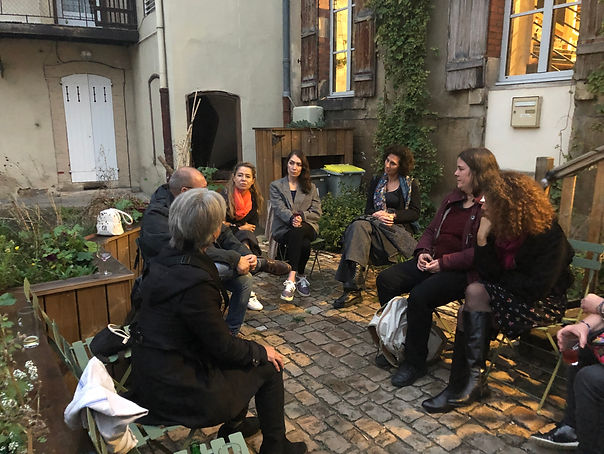
The Socratic approach offers a particularly illuminating model here. Socrates does not simply ask his interlocutors what they feel. He examines what they assert, brings their contradictions to light and questions the assumptions on which their discourse rests. This approach involves a kind of laying bare — not an intimate or confessional one, but a laying bare of thought.
I may believe I am courageous and discover that my actions are largely organized by the fear of being judged. I may believe I am independent and find that I spend a considerable part of my energy avoiding any dependence. I may present myself as modest and discover that this modesty also wins me the approval of others. Philosophical dialogue then reveals a possible gap between the image we have of ourselves, the reasons we give to explain our conduct, and the presuppositions, values or affects that this conduct lets us glimpse.
This approach can itself arouse fear. Thinking seriously involves a certain exposure. We must accept not knowing, contradicting ourselves, seeing a hypothesis called into question, or discovering that the image we have built of ourselves does not exactly match what our way of thinking reveals. This is one of the reasons why it is so hard to question ourselves.
From this point of view, the Socratic approach does not protect us against fear. Rather, it trains us to bear what many of our strategies are precisely trying to avoid: uncertainty, doubt, vulnerability, a momentary loss of control, or the questioning of a certain self-image. Philosophizing may therefore not mean becoming more self-assured, but becoming more able to bear what shakes our certainties without immediately trying to protect ourselves from it.
Who is allowed to admit their fear?
This brings us back to what had first amused us. Nothing suggests that men are less afraid; but not everyone pays the same price for admitting it. Where admitting fear costs authority or credibility, the fear does not disappear: it becomes harder to name and turns into something else — irritation, activity, certainty. So the question may not be “Who is afraid?” but “Who is allowed to admit their fear?” For we do not question a fear we do not allow ourselves to recognize; signing up for those two days was already a partial answer…
What life do we build so as never to be afraid?
The question “Should we listen to our fears or overcome them?” is thus shifted. It is neither a matter of obeying them nor of defeating them. It is first a matter of understanding the place they occupy in the way we perceive, think and act.
The real work might consist in identifying what we fear, examining the representations that feed these fears, understanding the desires and attachments they are linked to, and then observing the strategies we have built to protect ourselves from them. It would then remain to ask what these strategies cost us.
For we can organize our lives so thoroughly to avoid fear that fear ends up deciding for us. We avoid the risk of being hurt, but we also avoid certain relationships. We avoid failure, but we stop undertaking anything. We avoid dependence, but we refuse certain bonds. We avoid being judged, but we stop exposing ourselves, asserting ourselves and even thinking. Fear has then ceased to be merely a passing emotion: it has become an organizing principle of our existence.
The goal is not to become fearless: such an ambition is illusory and hardly desirable. It would rather be to become aware enough of our fears that they stop silently organizing the way we live.
In other words, it is not only a matter of asking: “What am I afraid of?”
But perhaps, above all: “What life am I building so as never to be afraid?”
 Reflections
 Reflections
 Reflections
CONTINUE THE DIALOGUE
Your reflections on this text
These lines make no claim to definitive truth: they are a proposal to discuss, extend or contradict. Your objections, questions and hypotheses are welcome.