 PhilomobileBy Laurence Bouchet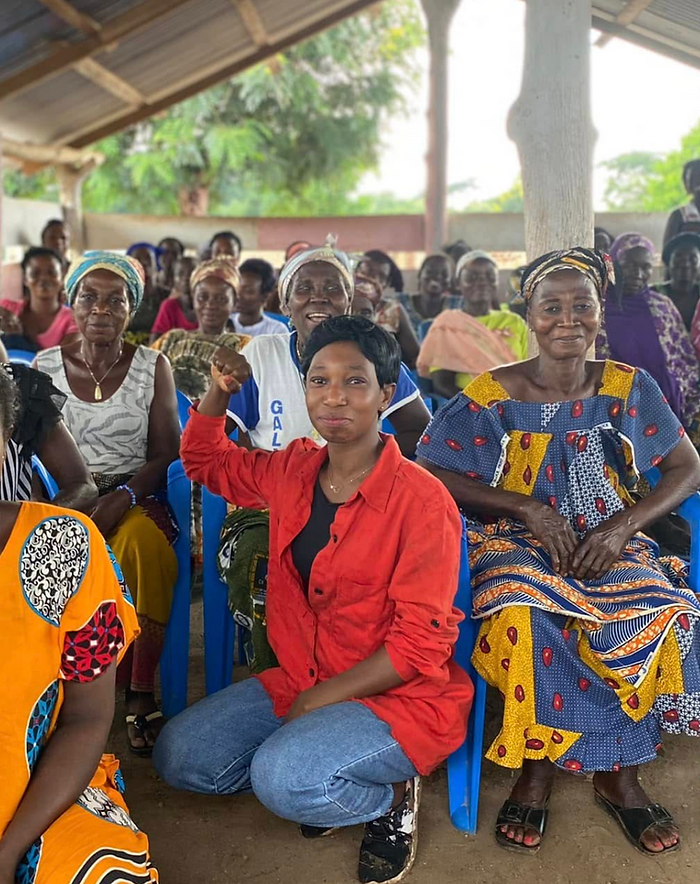
A Hard Life, and Yet a Lucid One
I have just finished reading the manuscript of my friend Adja Bio Cécile, in which she writes about an objectively very hard life. Born thirty years ago in a small village in Côte d’Ivoire, she knew poverty, hunger, beatings and a form of domestic slavery when she was only eight. Yet there is no pathos in her writing, no self-pity, no complaint — but a lucid voice full of life force. An energy that passes through adversity without trying to deny it, but without identifying with it either.
How do we grow in the face of adversity? That could be the question of her book, of her life. What allows some people to come out of it stronger, while others drown?
By contrast, I notice that in our French, Western society, we are quick to fall into a victim attitude. This contrast strikes me. How can such pain be turned into strength in Bio, while for us, far lesser hardships are often enough to freeze us in complaint?
Nietzsche was already criticizing the victim posture in 19th-century Europe. It has not faded; it has spread across the planet, amplified and become commonplace.
The Problem With the Victim Posture
When we cast ourselves as victims, we consider, rightly or wrongly, that someone, a group of people or a system has harmed us — but instead of seizing the situation to question ourselves, we lock ourselves into the most passive interpretation that comes to mind.
We could take the time to ask: Is it really harm? Could it be seen differently? Would everyone see it as harm? Could it be considered a neutral reality, or even a good thing? And if, despite everything, we can consider that it really is harm, what should we do? Denounce it? Complain about it? Make it an identity? Laugh at it? Fight it?
But one characteristic of our time pushes us to rush to judgement and prevents us from asking these questions: victimhood.
The Temptation of the Victim’s Role
Why is this interpretive grid so appealing? Because it gives us the good role. If the other is the tormentor, then we are on the side of Good, we think. Having suffered is enough to be right. No more need to think, no more need to doubt, no more need even to act: denouncing is enough.
This posture blocks any transformation. For to transform ourselves, we must first come out of shock. Yet we often confuse adversity with trauma. Whatever is difficult is immediately labelled “traumatic” — and therefore paralysing. But trauma means shock, and shock means being unable to think. The person becomes nothing more than a receptacle for pain, a bottomless well of wounds. They no longer try to understand; they react.
And the reaction often takes two forms: either we collapse (burnout, depression), or we attack (aggressive demands, moralizing denunciations).
In both cases, it is a form of nihilism: the negation of reality, turned against oneself or against others.
How Victimhood Sustains Itself
The most insidious thing is that the victim posture feeds itself. We end up loving our role as victim, with the moral capital it provides. Since I have suffered, I am on the right side. The other becomes the inhuman one, the barbarian, the oppressor — whom I can in turn hate, dehumanize, strike. It is a binary, Manichean, lazy logic. It seeks neither truth, nor dialogue, nor understanding: it seeks to be right.
This dynamic can also take the form of self-flagellation. Instead of placing themselves among the “good”, some people, consumed by guilt or self-denigration, place themselves among the “bad”. This is another face of the same powerless nihilism: no longer the glorification of the victim, but self-hatred, which equally forbids any transformation.
When Denunciation Doesn’t Set Us Free
This is not about minimizing pain. Yes, injustices exist. Yes, they must be denounced. But if we don’t take time to question ourselves, reaction only makes the harm worse, and denunciation has no effect on what we claim to be fighting.
For, as we can see on social media among other places, victimhood makes social bonds and democracy impossible. A society that encourages victimhood produces a culture of denunciation, suspicion and immediate accusation. Exchanges no longer aim to understand, but to triumph morally. Dialogue disappears. Democracy, founded on rational discussion between free citizens, becomes fragile. We witness social fragmentation: each person defends their own community of victims and rejects others as accomplices or tormentors — and the risk is that no one feels responsible any more, either for themselves or for the collective.
What Should We Do With Pain?
So what do we do with the harm we have experienced — or rather, with the problem we have observed? A wall to complain against, or a springboard for thinking? An argument for accusing, or material for transforming ourselves? A suffering to be consoled within our community, or an opportunity to bring the collective and democracy to life?
As Bio shows in her text, we are not born free; we learn to become free, and it is a long and beautiful journey.
Getting Out of the Victim Logic
No one escapes suffering or injustice. A failure, a betrayal, an abandonment, a humiliation, an unfounded accusation, a painful loss… Faced with these wounds, it is natural to feel sorrow, anger, sometimes even despair. But what tips a difficult experience into the victim posture is not so much the severity of what we have lived through as the way we let ourselves be locked in — or free ourselves.
Getting out of the victim logic therefore means learning to look at our suffering differently, without turning it into a fixed identity, without obsessively anchoring our existence in it. It does not mean denying what we have been through, but refusing to identify with it entirely, and understanding that suffering does not mean being damaged for ever — nor does it automatically make us right.
What I am describing here is a demanding path. No one is immune to collapse, to a moment of withdrawal or anger. Getting out of victimhood is not a posture adopted once and for all, but a daily effort. It is not an easy road, but a direction: not letting ourselves be defined by what we have been through.
Spinoza’s Approach: Seeing Causes Rather Than Feeding Resentment
Spinoza offers an interesting way out of hatred and resentment. According to him, nothing happens by chance: everything follows necessarily from the nature of things. If someone hurts me, it is because they are acting under the influence of their own inner conflicts, fears, conditioning or ignorance.
When they act, they obey a certain logic, just as a tile falling from a roof follows the law of gravity. We can suffer from what happens, as we are hurt by a falling object — but nothing forces us to add helpless anger, resentment or revenge. We may be victims, but nothing forces us to make ourselves victims.
If we try to understand the causes of what happens to us, if we place the event within a chain of causes, we leave the moralizing register and enter that of lucidity. We stop believing the world is against us. The world follows the law of necessity, no more, no less. And no one can act otherwise than they do at the moment they do it, given their history, their conditioning and their limits.
This is liberating, because we no longer make our inner peace depend on what others do or don’t do, say or don’t say.
Of course, it is better to act to protect ourselves, just as we avoid walking under a dangerous roof or wear a helmet to guard against a blow. But that does not mean hating: it means understanding.
Reality is not unjust; it simply is. And it is better to learn to live in it lucidly — that gives us more freedom and more power.
Strength Comes From Within
Someone who cultivates free, critical thinking capable of nuance already has solid ground from which to resist the temptation of victimhood. They have learned to look for causes rather than culprits, to examine facts before judging intentions, and to doubt their own certainties too.
They know that if we remain prisoners of what we have been through, it is often because we lack distance, perspective and self-confidence. Yet someone who cultivates a genuine love of self — not a fragile vanity, but a sense of their own worth — does not need to build their identity on that of the victim. They don’t need outside recognition to exist, because they have built an inner life.
Preferring Reason to Pathos: The Socratic Approach
In Plato’s Apology, Socrates is condemned to death on false charges. Yet he does not cast himself as a victim. He does not play on emotions, nor try to manipulate the jury’s compassion by bringing in his wife and children. He fully owns who he is, to the point of accepting the sentence without dramatizing it; he understands its logic, even though he judges it narrow.
Victimhood is often linked to the dominance of emotions: we suffer, and we want others to share that suffering. We hope their guilt or pity will relieve the pain we feel. But in doing so, we put our well-being in other people’s hands.
Socrates chooses reason, dialogue and self-examination. He asks questions: “Did I really corrupt the youth? Was I really impious?” Seeking the truth, he finds he has nothing to reproach himself for. He can then look death in the face — not as an unbearable injustice, but as a fact of reality that he freely accepts.
What keeps Socrates from sliding into victimhood is his trust in reason, in truth, in inner autonomy. He does not seek to be consoled by compassion or reassured by accusing. He owns his existence and his mission to philosophize. He does not try at all costs to prove he is right; he keeps thinking, searching, dialoguing.
Acting Together
Getting out of victimhood is not only about freeing ourselves; it is also about acting for others. In a way, this is also what Socrates did by showing humanity a path.
It means turning our experience of suffering into a strength that can serve a common cause. We might also think of Louise Michel, a figure of feminism and of the Paris Commune. A victim of repression, exiled and deported, she turned her suffering into political struggle, into a commitment to social justice and equality.
Her example shows that we can get out of the victim logic not by isolating ourselves, but by turning towards others and defending ideals greater than ourselves.
Cultivating Inner Resources
All of this, of course, requires certain inner resources. These can be cultivated:
- Gratitude: knowing how to see what is going well, what we have, what we can still do. When something hurts us, it doesn’t mean everything is going wrong.
- Education in resilience: teaching children, from an early age, to go through difficulties without turning them into insurmountable traumas.
- A return to truthful speech: expressing our pain without making it an identity, without dramatizing or manipulating.
- Demanding activities: sport, art, writing… which show that we can act despite pain.
- Holding an ideal: an artistic project, social commitment, a spiritual search… anything that gives a horizon, a goal, a direction.
You may have recognized some of your own reactions. But have you really put them to the test?
Understanding that we are locking ourselves into a victim logic is a first step. Getting out of it is another. It means looking closely at our ideas, seeing what holds them up, and sometimes facing what we would rather avoid.
 Reflections
 Reflections
 Reflections
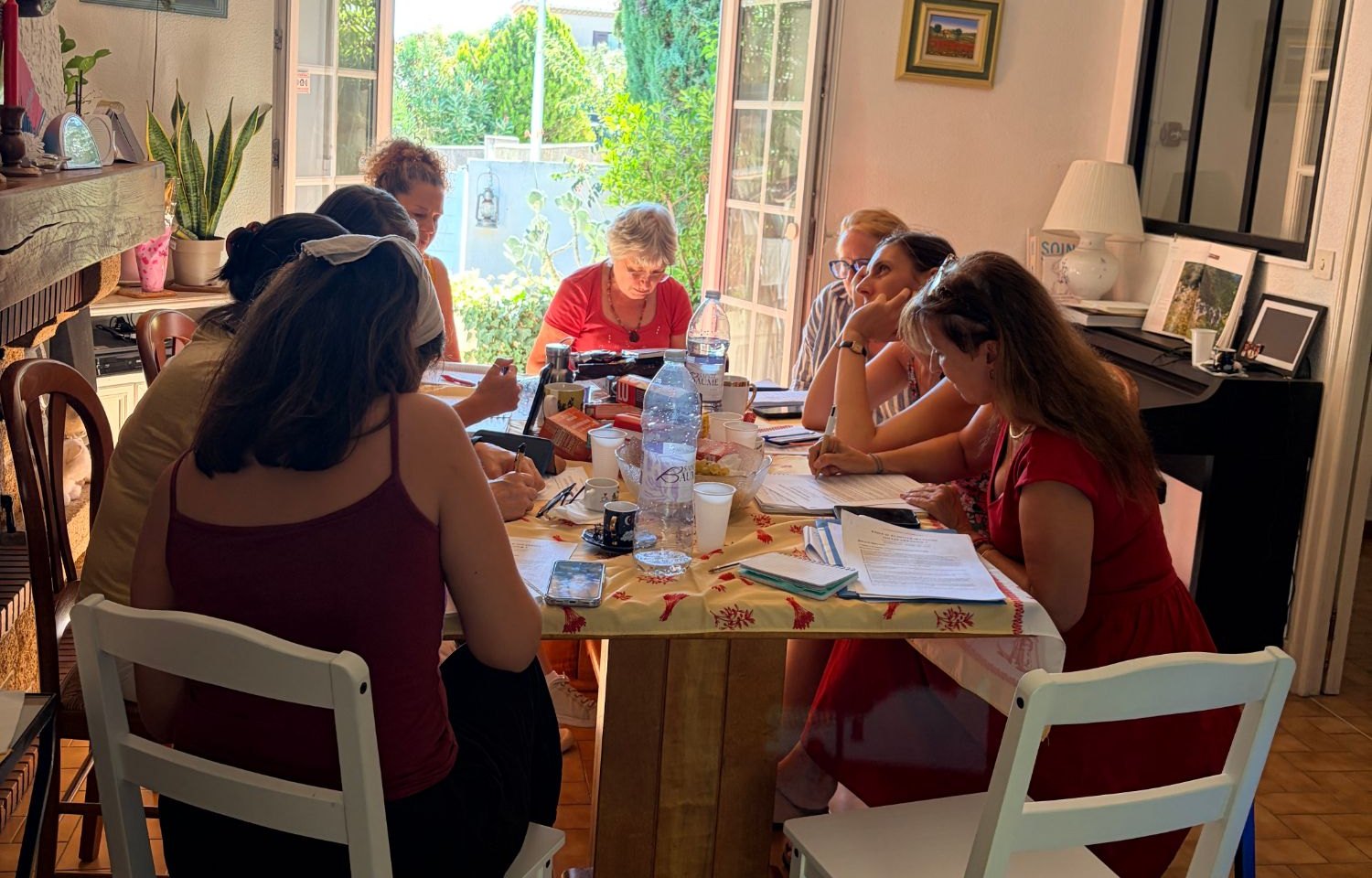
CONTINUE THE DIALOGUE
Your reflections on this text
These lines make no claim to definitive truth: they are a proposal to discuss, extend or contradict. Your objections, questions and hypotheses are welcome.