 PhilomobileBy Laurence Bouchet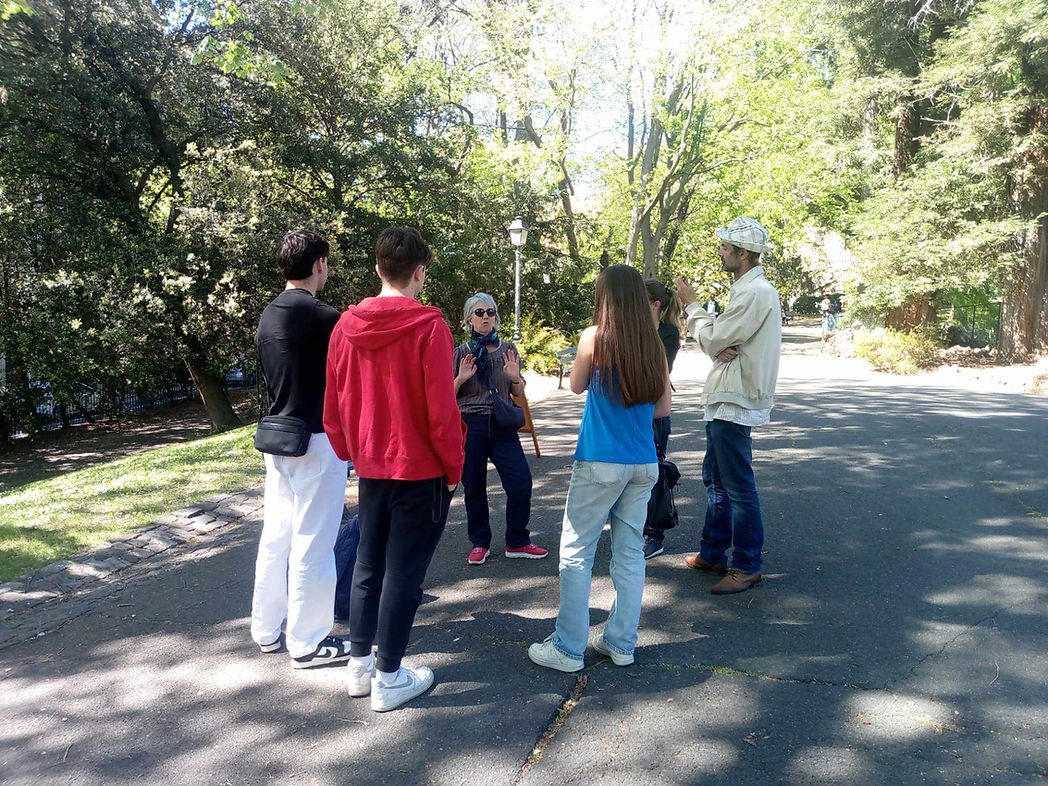
Philosophical practice, which has been developing in France and around the world for more than twenty years, is distinct from psychology and personal development — two fields it is sometimes confused with.
Unlike psychology, it does not aim to heal or treat pathologies. Where psychology seeks therapeutic solutions through speech and narrative, philosophical practice proposes to exercise thought itself.
It is to the mind what sport is to the body: a regular exercise meant to strengthen and loosen up our thinking. The point is not to cure, but to train reflection — to work the mind the way we work and stretch a muscle.
Philosophical practice is also not to be confused with personal development, which is generally centered on the individual. Philosophical practice has a collective, social dimension. In workshops, participants learn to think together. These are not debates about who is right, but shared spaces of reflection where ideas and hypotheses are explored, where people learn to shift perspective and to think against themselves.
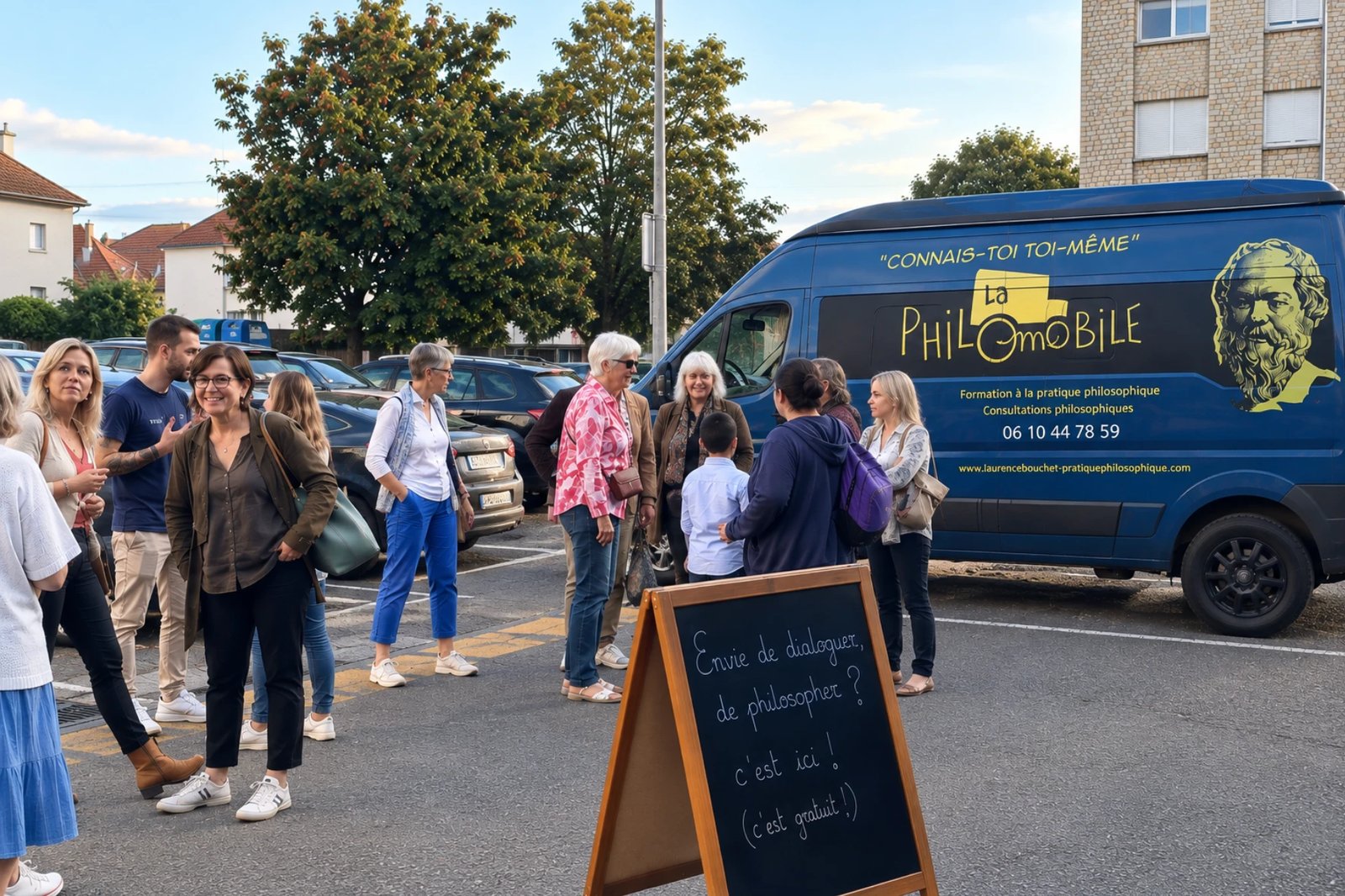
What's more, philosophical practice unfolds in unexpected places: prisons, nursing homes, marketplaces, neighborhoods, the street. Unlike academic philosophy, often confined to schools and universities, it takes over public space.
In the manner of Socrates, practicing philosophers question whomever they meet along the way — a baker, a carpenter, a hairdresser, or a university professor.
They do not hesitate to shake the certainties of those who take shelter behind their own knowledge. Intelligence, in fact, can sometimes turn against itself: a brilliant person will often defend an idea simply because they like it, without asking themselves why. They will justify their emotions instead of questioning them — which can lead to rigidity and intolerance. And yes, intelligence can sometimes make you an idiot.
The practicing philosopher, like Socrates, is not impressed by this kind of behavior. Their role is to expose these rigidities and awaken critical thinking.
Philosophical practice
 Philosophical Practice
 Philosophical Practice
 Philosophical Practice
CONTINUE THE DIALOGUE
Your reflections on this text
These lines make no claim to definitive truth: they are a proposal to discuss, extend or contradict. Your objections, questions and hypotheses are welcome.