 PhilomobileBy Laurence Bouchet
Can someone truly love us without envisioning a shared future? And, conversely, does building a future with someone prove that we truly love them?
The question seems simple, but the phrase “to project” can refer to at least two different movements.
We can first project a shared future: imagining living together, having children, buying a house, traveling, or simply continuing to move forward side by side.
But we can also project our expectations onto the other person: attributing to them the qualities we need, imagining what they could become, or believing they share our desires because we wish they did.
These two forms of projection can converge. When we imagine a future with someone, are we certain we are building it with them? Are we not sometimes fitting them into a script we have already written?
So we can love without projecting. But we can also project without truly loving.
Loving and wanting to build: are they the same thing?
Loving someone refers to a feeling, or a certain way of wanting their good. Projecting a future with that person involves a decision: making room for them in one’s future.
These two movements can go together, but that is not always the case.
We can feel attachment, desire, admiration or tenderness for someone without being ready to change our life for them. We can love their presence while refusing the constraints, the sacrifices or the responsibilities a shared life would involve.
But the opposite situation also exists.
We can want to build with someone because that person reassures us, brings us material stability, matches our social milieu, or shares a plan that suits us. We may desire marriage, a house, children, or a certain security more than the person with whom we hope to obtain them.
In that case, we may not be projecting a future with the other person, but with the function we have them occupy in our life.
A shared plan is therefore no proof of love — just as its absence is no proof of the absence of love.
Why doesn’t someone in love always want to build a future?
The absence of a plan can mean very different things.
A person may not project a future because they have just been through a separation, are going through an unstable period, or don’t yet know what they want. They may fear losing their freedom, suffering again, or repeating a past relationship.
They may also sincerely enjoy the relationship without wishing it to evolve. In that case, their lack of projection is not necessarily a fear to overcome. It can be a position they consciously hold.
It is tempting to interpret this indecision in whichever way hurts us least:
- “He loves me, but he’s afraid.”
- “She’ll be ready eventually.”
- “With enough patience, he’ll understand we can be happy.”
These hypotheses are possible, but they also risk sustaining an expectation that rests on nothing but our own desire.
A more demanding question then arises: are we listening to what the other is telling us, or are we replacing their words with the future we hope for?
Projecting without truly loving
The desire to build a shared future can have motives other than love.
We may commit because we dread loneliness, because time is passing, because the people around us expect us to form a couple, or because the relationship gives us a comfort we don’t want to give up.
We can also enjoy the life the other person makes possible without deeply loving who they are.
The projection then becomes utilitarian: the other person appears as the condition for a personal project.
This does not necessarily involve conscious manipulation. We can believe we love someone when we are mostly attached to the security, pleasure, or status the relationship provides us.
The three forms of friendship distinguished by Aristotle can help us examine this ambiguity.
This question connects to the one raised in Libérons le sentiment amoureux !, about what we truly mean by loving.
Aristotle’s three forms of friendship
In the Nicomachean Ethics, Aristotle distinguishes three forms of friendship according to what grounds the bond: utility, pleasure, and virtue.
Even though friendship and love are not entirely the same thing, this distinction lets us question what we are really looking for in a romantic relationship.
The relationship based on utility
In a friendship based on utility, we value the other person for what they bring us.
A romantic relationship, too, can rest on need. The other person offers material security, emotional stability, social standing, a family structure, or protection against loneliness.
In this kind of relationship, it is entirely possible to project very far into the future.
One can buy a home, have children, build a shared life and plan for retirement without ever taking a deep interest in the singularity of the person one is building it with.
The plan is solid because the interests converge. But what happens to the bond once the other person no longer meets the need that founded it?
If the material situation changes, if the security disappears, or if one of the two partners no longer fulfills the expected function, the relationship risks losing its reason for being.
We had projected a future — but did we love the person, or what they made possible?
The relationship based on pleasure
In a friendship based on pleasure, we love the other’s company because it is agreeable to us.
A romantic relationship can likewise be built around desire, seduction, shared leisure, complicity, or the joy of being together.
This kind of bond may seem less inclined toward material projection than the one based on utility. It often favors the intensity of the present: we feel good together, and that is enough.
But pleasure, too, can feed a shared project. Because we feel happy with the other person, we want that experience to continue.
The difficulty is that what pleases us can change. Tastes evolve, desire transforms, novelty fades. When the relationship becomes less pleasant, what remains of the bond?
We may have loved the moments spent with that person. But did we love the person themselves, including when they stopped pleasing or entertaining us?
The relationship based on virtue
The third form of friendship is, for Aristotle, the most accomplished. It unites people who recognize and appreciate one another for who they are, and who wish each other well.
It is no longer only a matter of seeking an advantage or a pleasure. Each values the other for their own sake.
Does such a relationship necessarily involve projecting a shared future?
Not necessarily in the material sense. Wanting someone’s good does not automatically lead to sharing a home, starting a family, or organizing one’s whole existence with them.
But this form of bond may contain another kind of projection: not a script imposed on the other, but the wish to grow alongside them.
Each helps the other develop what is best in them. They encourage them, but can also question them, contradict them, and put their ideas to the test. They do not seek to keep them in the role that suits them.
To truly love would then consist less in saying, “I know what we will become,” than in being able to say, “I want us to become more lucid, more free, and more capable of acting — even if that change transforms us.”
This kind of love does not settle for reassurance. It sometimes confronts us with what we would rather not see. It does not try to shape the other according to our expectations, but to help them become more fully themselves.
Could that be true love: a relationship in which each helps the other grow, accepts being questioned by them, and refuses to lock them into a fixed image?
Projecting a future, or projecting our expectations?
When we envision a shared life, it is common to believe that our plan is genuinely shared.
But is it?
Have we asked about the other person’s motivations, or have we assumed they wanted the same thing we do? Are they seeking the same future, or simply agreeing to take part in ours? At what point does proposing become persuading? And at what point does persuading become imposing?
We do not only project a future with the other person. We also project onto them an image shaped by our own needs.
Because we need gentleness, we see them as a gentle person. Because we want to be reassured, we read certain gestures as the promise of a future commitment. Because the relationship matters to us, we assume it holds the same place in the other person’s life.
Projection is not necessarily a deliberate lie. It is often a way of filling in what we don’t know.
But it becomes a problem when it stops us from looking at the present situation:
- What is this person actually saying?
- What are they actually doing?
- Do their actions match their words?
- Are we expecting from them something they never promised?
- Are we accepting the relationship as it actually is, or only as we hope it will become?
- Do we love the real person, or the one they might become in our script?
We are sometimes more attached to a possibility than to the actual relationship.
This question connects to the one raised in the article Faut-il ne rien attendre des autres ?
Can a shared project become a trap?
Building a future together can be the expression of a deep love. It can also become a way of no longer looking at the present.
The plan reassures us because it gives the relationship a shape. We talk about a house, a wedding, or a trip, and these images seem to prove the bond is solid.
But the plan can also mask certain difficulties.
Are we still curious about the other person? Do we let ourselves be transformed by the relationship? Or are we mostly seeking confirmation of a future we have already imagined?
A couple can go on carrying out their plans while having stopped truly meeting each other. The partners accomplish what they had intended, but no longer question each other, no longer surprise each other, and no longer help each other grow.
Conversely, a relationship without any grand material plan can be deeply alive if each person recognizes the other, takes an interest in who they are becoming, and accepts being moved by them.
The quality of love is therefore not measured solely by the importance of shared plans.
Living in the present: freedom or avoidance?
“I prefer to live day by day” can express a genuine openness to the present. But this phrase can also serve to avoid a decision.
Living in the present does not mean ignoring the future consequences of our choices. A relationship evolves, even when no one wants to define it. Attachment grows, expectations become clearer, and the time invested comes to matter more.
Refusing to project a future is therefore not a neutral position. It also involves the other person, especially when they hope to build a lasting relationship.
The doubt that comes with this choice connects to what the article Engagement, doute et incertitude explores.
The question is not only: “Does this person love me?”
It also becomes: “Does the relationship they are offering me match what I want and what I can live without losing myself?”
Is love enough?
We sometimes confuse the sincerity of a feeling with the possibility of a relationship.
A person can love us and still be unable to offer us the relationship we want. They can be honest in their attachment and just as honest in their refusal to commit.
Conversely, a person can agree to build a life with us without feeling the kind of love that wants our good and recognizes us for who we are.
We would generally prefer a simple answer: if she loves me, she’ll stay; if he’s building a future with me, it must mean he loves me.
But neither the presence of a plan nor its absence is enough to reveal the true nature of the bond.
What grounds the relationship needs to be examined:
- Do we stay together because we need each other?
- Because we take pleasure in being together?
- Because we sincerely want each other’s good and growth?
- Are all three of these dimensions present?
- Which one dominates when the relationship goes through a difficulty?
Love abolishes neither fears, nor incompatibilities, nor life choices. And a shared plan guarantees neither recognition of the other nor the desire to grow alongside them.
Wait, build, or let go?
Faced with someone who isn’t projecting a future, we often look for the right decision: should we be patient, or should we leave?
Faced with someone who is projecting a future, we should perhaps ask, just as seriously: why do they want to build something with us, and why do we want to build something with them?
Several questions deserve to be examined:
- What exactly do you expect from this relationship?
- Does the other person clearly know your expectations?
- Do you desire this person, or the plan they make possible?
- Have they asked for time, or do they refuse the very principle of commitment?
- Do they give you concrete reasons to hope for change?
- What do you bring each other: security, pleasure, a chance to grow?
- Can you contradict each other without immediately threatening the relationship?
- Does the other person help you become freer, or do they keep you in the role they need?
- How long are you willing to remain in uncertainty?
- Is your waiting a conscious choice, or the fear of losing the relationship?
- Would you accept this relationship if you knew it would never change?
This last question is often decisive.
If the relationship stayed exactly as it is today, would you still want to live it?
Clarifying rather than interpreting
When a relationship troubles us, we spend a lot of time interpreting the other person: their silences, their messages, their hesitations, their contradictions.
But constantly trying to understand the other person can pull us away from our own position.
What do we want? What do we refuse? What concessions are we willing to make? At what point does our patience become a way of not deciding? At what point does our shared plan become a way of avoiding asking ourselves whether we still love each other?
Philosophy does not offer a universal answer to these questions. It allows us to test the answers we too quickly give ourselves.
It helps us distinguish:
- what we know from what we imagine;
- love from need;
- the pleasure of being together from the wish for the other’s good;
- the present from the promise;
- the shared plan from the imposed script;
- acceptance from resignation;
- the desire to build from the fear of being alone.
A philosophical consultation to examine your relationship
It is difficult to reflect alone on a relationship in which we are emotionally involved. We often come back to the same interpretations, because certain conclusions frighten us or contradict what we hope for.
The philosophical consultation offers a space to examine your situation, without ready-made answers.
Through precise questioning, we can clarify what you expect, confront your interpretations with the facts, and identify the assumptions that shape the way you see the relationship.
We can, in particular, examine:
- what you call “loving”;
- the reasons why you wish to commit, or to remain free;
- what you project onto the other person;
- the share of utility, pleasure, and desire for growth in your relationship;
- the difference between the real person and the one you hope they will become.
This is not about deciding for you whether to stay, leave, or commit. It is about helping you understand the position you are taking, and choose more clearly.
The consultation can take place alone or as a couple, by video call or in person. Rates and terms are detailed on the booking page, and several filmed consultations let you see concretely how it unfolds.
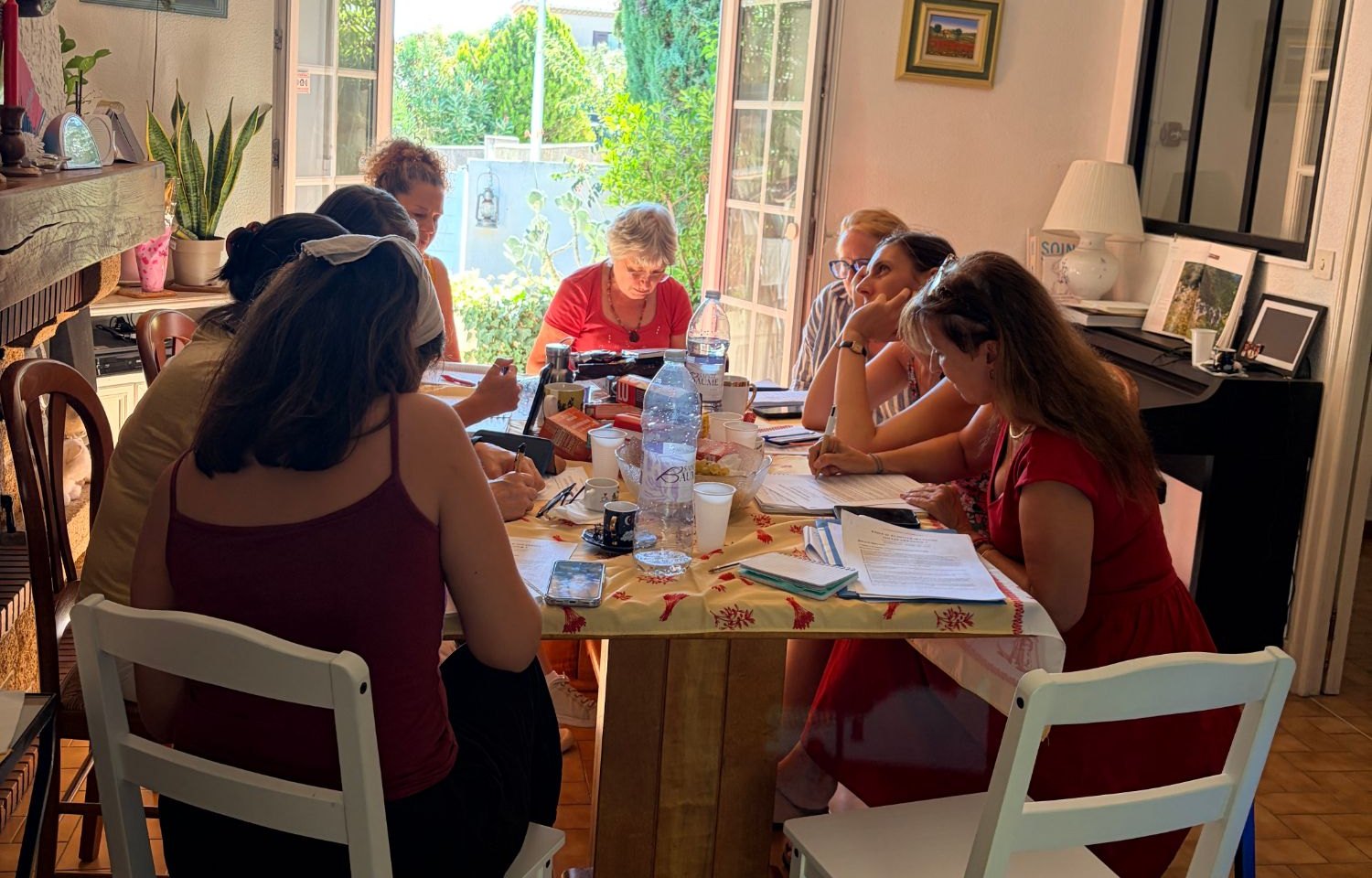
This text extends the reflections developed during a philosophy workshop devoted to love, waiting, and projection. Thank you to the participants for the questions and ideas that fed this work.
 Reflections
 Reflections
 Reflections
CONTINUE THE DIALOGUE
Your reflections on this text
These lines make no claim to definitive truth: they are a proposal to discuss, extend or contradict. Your objections, questions and hypotheses are welcome.